Noosa is built around water, sunlight and visitors. That combination is terrific, however it likewise means medical emergency situations take place in really public locations and typically far from a hospital. I have seen more events next to a swimming pool, on a strolling track or in a coffee shop than in any official work environment. In those minutes, the very first individual who acts is often a spectator who has actually done a first aid course in Noosa, not a doctor.
If you live, work or study in the area, a nationally certified first aid certificate is among the most useful credentials you can hold. It is also far much easier to achieve than many people believe. The secret is comprehending how national accreditation works in Australia and how to move through each action without squandering time or money.
This guide walks through the path from "I should most likely do a course" to "I hold an acknowledged first aid certificate in Noosa", with the sort of information trainers generally share only in the classroom.
Why emergency treatment and CPR matter so much in Noosa
Locals understand how quickly things can go wrong here. A couple of patterns show up again and again in Noosa first aid training sessions:
People ignore heat and dehydration. On hot days, surf instructors and café personnel see fainting, heat fatigue and confusion from tourists who did not consume enough water. Identifying the early indication and understanding when to call an ambulance matters more than any book definition.
Water alters the risk profile. CPR course Noosa individuals hear a lot of genuine stories about near-drownings in browse, pools and rivers. Resuscitation after drowning is slightly various to a standard cardiac arrest on land, and trainers in seaside areas typically emphasise this with extra scenarios.
Outdoor activities add special threats. Snake bites in the hinterland, falls on rocky tracks near the national forest, scooter spills and bike crashes: these are regular topics in Noosa first aid courses. You learn how to improvise when you are 30 minutes from the nearest facility.
Tourism and hospitality indicate public incidents. Personnel in resorts, cafés, health clubs and trip operators often total emergency treatment and CPR courses in Noosa because they are the closest responsible grownup when a guest collapses or a child is injured.
None of this has to do with becoming a paramedic. It has to do with feeling calm enough, and skilled enough, to bridge the gap till expert help arrives.
What "nationally accredited" in fact means
Many individuals enrol in a Noosa first aid course since an employer or market body has actually informed them they must hold a current, nationally identified certificate. That expression is not simply marketing.
In Australia, first aid training Noosa providers need to be Registered Training Organisations (RTOs) if they wish to issue nationally acknowledged Statements of Attainment. When you see "RTO" and a number on the website or brochure, you are handling a company managed under national standards.
For a basic emergency treatment certificate Noosa participants typically finish some mix of the following present units of proficiency:
HLTAID009 Offer cardiopulmonary resuscitation. This is the core CPR Noosa system, focused on adult, child and infant CPR, use of an AED, and management of an unresponsive casualty.
HLTAID010 Provide fundamental emergency life assistance. Often packaged with other units, this extends your skills into more comprehensive emergency management.
HLTAID011 Noosa first aid courses - First Aid Pro Supply emergency treatment. This is the primary Noosa emergency treatment course most workplaces need. It covers CPR plus typical injuries, illnesses and event management.
HLTAID012 Provide first aid in an education and care setting. This is common in child care, schools and outdoors school hours care, and consists of asthma and anaphylaxis management customized to children.
When you finish a nationally identified first aid course in Noosa, you get a Declaration of Attainment that lists the specific unit codes you have actually achieved. This is what companies and auditors look for, not simply the words "emergency treatment certificate".
A local company such as Emergency treatment Pro Noosa, or any other recognized RTO, provides these units under ASQA (or the pertinent regulator) requirements. That is what allows your certificate to be accepted throughout Australia, not just in Queensland.
Step-by-step course to your first aid certificate in Noosa
The process looks made complex from the outdoors, especially if you have not studied for a while. In practice it burglarizes a couple of simple stages.
Here is the normal series the majority of people follow when they register in a Noosa first aid course or CPR course Noosa broad:
Choose a nationally identified company in Noosa Pick the best course type for your requirements Enrol and finish any pre-course study Attend and pass the practical emergency treatment training in Noosa Receive and keep your emergency treatment certificate Noosa companies will acceptLet us unpack what each of these steps involves in real life.
Step 1: Choosing the ideal provider in Noosa
Not all emergency treatment training in Noosa is equivalent. Some workshops are casual info sessions, beneficial however not accredited. Others are complete national systems provided by certified fitness instructors under an RTO.
When you compare Noosa first aid training options, inspect a couple of practical points.
First, verify accreditation. The site or pamphlet ought to clearly display an RTO number and define that the course provides units such as HLTAID011 or HLTAID009. If you can not see those details, treat it as a red flag.
Second, take a look at shipment method and schedule. Many first aid courses in Noosa run as mixed training, with online theory finished beforehand and a shorter face to deal with session on the day. That is practical if you work shifts or have child care responsibilities. Inspect whether sessions are provided on weekends, evenings or in extensive weekday blocks.
Third, consider area and parking. A main place may sound appealing, but if you are driving in from the hinterland at peak hour, a site near the highway or with simple parking might be smarter. I have seen participants get here 20 minutes late, sweaty and flustered, simply due to the fact that they misjudged Hastings Street traffic.
Fourth, ask about class size and devices. A great emergency treatment and CPR course Noosa broad provides each participant enough time on a manikin and practice equipment. If a provider routinely squeezes 20 individuals into a small space with only 2 manikins, your practical knowing suffers.
Finally, evaluation support and responsiveness. Reliable service providers answer e-mails and calls rapidly, send out clear signing up with guidelines and explain what takes place if you require to reschedule.
Well known operators such as Emergency treatment Pro Noosa have actually improved these processes over years of running courses along the coast, but you ought to still do your own due diligence.
Step 2: Selecting the best type of Noosa emergency treatment course
Different roles need different levels of training. A browse coach, a childcare educator and a workplace employee may all participate in first aid courses in Noosa, however they will not constantly register in the same unit.
Here is how I usually recommend individuals consider it.

If your main concern is being able to respond to a heart attack in the neighborhood, a CPR training Noosa session that provides HLTAID009 is the minimum. It is much shorter and less expensive than a complete first aid course and is frequently renewed every 12 months as a CPR refresher course Noosa employers accept.
If your workplace, club or industry code requires "Supply emergency treatment", you are likely searching for HLTAID011. This is the standard Noosa first aid course and constructs on CPR Noosa content to cover bleeding, fractures, burns, asthma, anaphylaxis, shock, seizures and fundamental occurrence management.
If you work in early youth or schools, your regulator will generally expect HLTAID012, the education and care version. Lots of Noosa emergency treatment courses bundle this as "emergency treatment in childcare" and weave in real circumstances from play areas, trips and classrooms.
Some individuals register in combined first aid and CPR courses Noosa providers run, where the CPR component is assessed as part of the more comprehensive emergency treatment system. Others choose to split them, doing an extended course when, then much shorter CPR-only refreshers in following years.
Your choice must be driven by your actual danger profile and any formal requirements from your market body or employer. When in doubt, ask the provider to point you to the specific unit code and duration of the Noosa emergency treatment course they are recommending.
Step 3: Enrolment, USI and pre-course learning
The enrolment process for emergency treatment training in Noosa is typically straightforward, but there are 3 information that journey individuals up.
The initially is the Special Trainee Identifier, or USI. Anyone undertaking nationally identified training in Australia must have one. It is complimentary and can be produced online in a couple of minutes, but you will require ID such as a motorist's licence or Medicare card. Many individuals leave this to the morning of the course, then waste their very first break searching for old files on their phone. It is far simpler to arrange it out a few days beforehand.
The second is pre-course research study. The majority of modern Noosa first aid courses, especially those run by companies like First Aid Pro Noosa, utilize combined learning. That generally indicates an online module covering theory, legislation, fundamental anatomy and essential concepts. You complete quizzes, checked out short case studies and reach the class ready to concentrate on hands-on skills. Avoiding or rushing this work will either obstruct your participation or leave you struggling to keep up.
The 3rd is comprehending language, literacy and physical requirements. Emergency treatment and CPR training Noosa sessions consist of timed CPR evaluations on adult and infant manikins, typically for a minimum of two minutes of continuous compressions. If you have a shoulder, back or knee injury, speak to the provider in advance so they can prepare changes. For participants who speak English as an extra language or have reading problems, early notification allows trainers to offer extra support or alternative assessment methods.
You will likewise usually get a verification e-mail with place details, begin time, parking notes and what to bring. Take 5 minutes to read it effectively. It is surprising the number of individuals show up in thongs to a course that plainly requests closed shoes.
Step 4: What really happens in a Noosa emergency treatment class
First help and CPR Noosa classes tend to be practical, loud and, at times, challenging in a great way. A typical day in an integrated emergency treatment and CPR course Noosa wide appearances something like this:
The fitness instructor starts with intros and a fast sense check of your goals. In Noosa, there is often a mix of surf instructors, hospitality staff, child care workers, senior citizens and parents. The trainer will customise emphasis and examples based on who is in front of them.
Next comes fundamental scene assessment and security. You find out how to rapidly read an environment, secure yourself and others, and decide whether it is safe to technique. Coastal trainers frequently utilize beach and swimming pool scenarios here, so the context feels relevant.
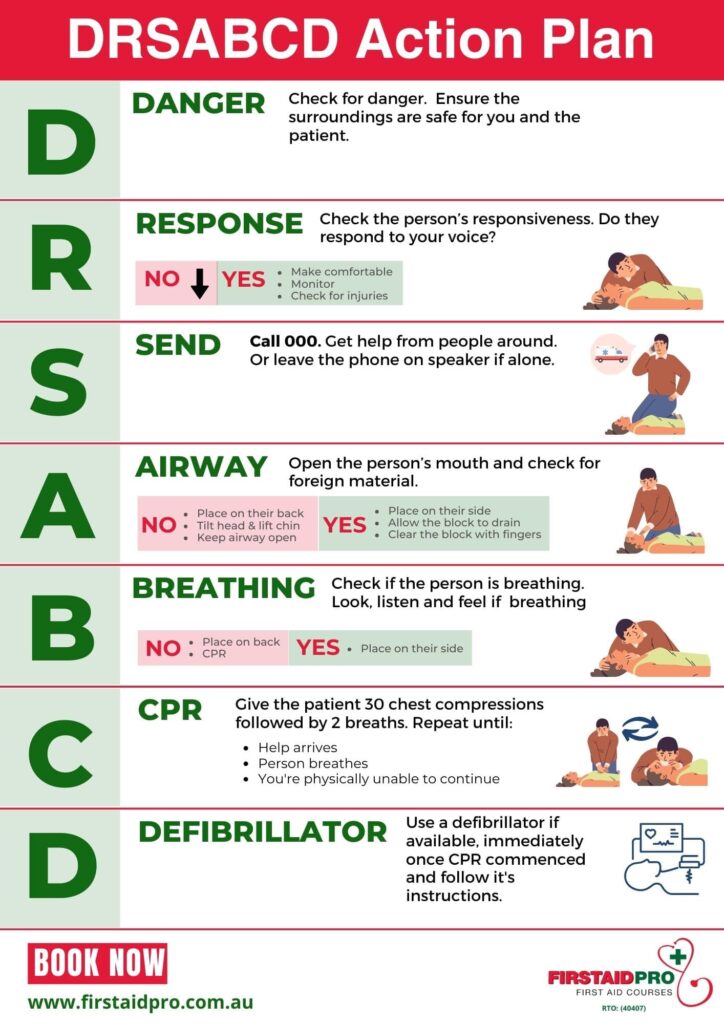
Then you move into DRSABCD and CPR. This is where the manikins come out. You will practise chest compressions, rescue breaths if required, usage of AEDs and management of an unconscious casualty who is breathing. Anticipate feedback on hand position, depth, rate and how to coordinate compressions with others if you have actually help.
After CPR, the class normally moves through breathing problems, asthma and anaphylaxis, then into bleeding, fractures, burns and head injuries. Fitness instructors in Noosa often pepper these subjects with stories from real regional occurrences: a skateboard fall on a steep street, a jellyfish sting, a fall from a bike on a damp boardwalk.
Later in the day, you may work through group circumstances. One participant may play a casualty with a believed back injury after a dive, another might be a panicked spectator, while you collaborate the action, call Triple Zero (000) and provide first aid.
Assessment generally runs throughout, not just at the end. You might complete written concerns, verbal questioning, demonstration of skills and circumstance performance. If something fails in your initial effort, a proficient trainer will coach you, then reassess when you have had a chance to fix your approach.
By the time the session finishes, you need to feel physically tired but mentally more positive. That tiredness is an excellent indication: you have actually practised hard, not just seen others.
Step 5: Receiving your first aid certificate and keeping it current
After you complete all evaluation parts satisfactorily, the RTO processes your outcomes and issues your Declaration of Achievement. Lots of Noosa emergency treatment training service providers deliver certificates digitally within 24 hours, in some cases on the exact same day. Others might take 2 or 3 business days throughout hectic periods.
Your certificate need to plainly show:
- The provider's name and RTO number Your full name and USI (or a note that the USI has actually been verified) The units of proficiency accomplished, such as HLTAID009 and HLTAID011 The concern date
Most employers now accept digital certificates. You can save the PDF, upload it to onboarding systems or email it to HR. It is smart to keep a backup copy in cloud storage in case you change jobs or devices.
The less glamorous part is keeping currency. National training bundles do not legally end, but market best practice and many regulators strongly suggest:
CPR refresher training every 12 months (for HLTAID009) so your compressions and AED abilities remain sharp.
Full first aid Noosa refresher courses, generally every 3 years for HLTAID011 or HLTAID012, so your understanding equals standard updates and you do not lose confidence.
Many individuals treat future refreshers as a box-ticking exercise. The ones who get the most from repeat training utilize them to ask "what has altered considering that my last Noosa emergency treatment course?" and to review situations that genuinely challenge them.
Practical preparation: making your training day smoother
A little planning turns a demanding training day into a productive one. Before attending a Noosa emergency treatment course, overcome this brief checklist.
- Confirm your reservation, location address and begin time Create or locate your USI and bring photo ID Complete all online pre-course work and quizzes Wear comfortable clothes and closed shoes appropriate for kneeling Bring a water bottle, treats and any reading glasses you require
These details sound minor, however they have a direct impact on how much you discover. People who arrive late, flustered or without pre-course work finished tend to spend the very first hour catching up instead of soaking up the fitness instructor's explanations.
Local situations to pay attention to during Noosa first aid courses
The finest Noosa emergency treatment courses lean into the local environment. As an individual, you can magnify that benefit by psychologically practicing how you would apply each skill to locations you actually invest time.
When you practice CPR, envision it taking place on a hot boardwalk near the river, not simply on a clean classroom flooring. Think of sun direct exposure, crowd control and how to direct paramedics to you in a maze of holiday apartments.
During snake bite training, picture yourself on a hinterland walking track or in long yard near a property limit. Inquire about real action times for ambulances to suburbs, and what that suggests for plaster technique and patient reassurance.
In asthma and anaphylaxis sections, think of a kid reacting to food in a busy café on Hastings Street. Consider where the adrenaline auto-injector might be kept, how loudly you would call for help over background noise, and where you would place the kid while awaiting an ambulance.
For heat health problem and dehydration, consider surf instructors, runners and older visitors walking in the national forest. Ask how to balance rest, cooling and hydration, and when a seemingly moderate circumstance becomes urgent.

Making these mental connections during first aid training in Noosa changes generic material into useful, memorable methods you can remember under pressure.
Balancing quality, expense and convenience
People frequently ask how much they need to spend for an emergency treatment course in Noosa. Prices differ, but a couple of factors to consider matter more than the precise figure.
Cheaper is not constantly even worse, and expensive is not constantly better. Some larger providers such as First Aid Pro Noosa can keep costs competitive due to the fact that they train high numbers. What matters is whether they still buy knowledgeable fitness instructors, appropriate equipment and little enough classes.
A course that fits your schedule is only important if you can offer it your full attention. For moms and dads of kids, an early start and early finish can free up school pickup. For hospitality workers, a midweek afternoon might be difficult, but a Monday course throughout a quieter period can work well.
If your company is paying, make sure the chosen Noosa emergency treatment training meets their accreditation and reporting requirements. Some organisations require detailed attendance records, specific unit codes or integration with office health and wellness systems.
Occasionally individuals are lured by online-only choices that guarantee a "completely online" emergency treatment certificate. Be extremely cautious here. For identified HLTAID009 and HLTAID011 systems, you need to show useful abilities such as CPR compressions on a manikin under assessment conditions. Any provider declaring otherwise is not delivering a nationally accredited course, and your "certificate" might not be accepted.
Using your new abilities after the course
The true test of a Noosa first aid course comes not in the exam, however the first time you hear somebody collapse behind you in a café or area a child face-down in a pool.
Most graduates go through three foreseeable phases.
Immediately after the course, confidence is high. You can remember DRSABCD quickly, you keep in mind the precise hand position for compressions and the actions for managing a sprained ankle or nosebleed.
Three to six months later, details start to blur. You keep in mind that you discovered something about stroke acknowledgment or diabetes, but the acronym is fuzzy. This is where a quick self-refresh using your course workbook or a trustworthy first aid app helps.
One to 3 years later on, without practice, lots of people lose self-confidence. This is why a CPR refresher course Noosa large every 12 months is so important. You are not starting from scratch; you are polishing and reinforcing.
I have talked to previous individuals who explained freezing the first time they dealt with a real emergency situation, then hearing their fitness instructor's voice in their head, talking them through each action. That mental script just exists because they engaged fully in the original Noosa first aid training, asked concerns and practiced seriously.
Bringing all of it together
Earning a first aid certificate in Noosa is not about ticking a compliance box. It has to do with preparing yourself to act when it matters, whether that is on a congested summer season beach, a rural roadway at sunset or a quiet workplace on a Tuesday morning.
The path is clear. Recognize a respectable RTO delivering a suitable emergency treatment course in Noosa, complete your enrolment and pre-course learning, take part totally in practical training and scenarios, then preserve your skills with regular CPR and emergency treatment refreshers.
If you select a quality service provider, whether that is Very First Aid Pro Noosa or another recognized organisation, you gain more than a PDF certificate. You get the confidence to advance rather than go back when somebody close by needs immediate assistance. In a community like Noosa, with its consistent flow of individuals and its outdoor way of life, that confidence is worth an excellent deal.
Nationally Recognised First Aid Courses Noosa Locals Trust! First Aid Pro is one of Noosa’s leading providers of accredited CPR and first aid courses. Established in 2010, our nationally registered training organisation (RTO) has equipped over 3 million Australians with essential life-saving skills through our experienced team of 110+ expert trainers. Conveniently servicing Noosa and the Sunshine Coast region, we provide top-quality, nationally accredited CPR and first aid training sessions tailored to your needs, whether for workplace requirements, career advancement, or personal safety. From childcare-specific first aid training to advanced first aid and resuscitation courses, we’ve got you covered. First Aid Pro – First Aid Course Noosa Noosa Conference Centre 73 Hilton Terrace Noosaville QLD 4566 Australia Phone: (08) 7120 2570 Secure your Noosa first aid course or CPR training with us and build the confidence to handle emergencies with a trusted Noosa first aid provider. Take the first step towards becoming a skilled and capable first aider with First Aid Pro Noosa today.
Location & Venue Details Our First Aid Pro Noosa courses are held at Noosa Conference Centre, 73 Hilton Terrace, Noosaville QLD 4566, conveniently located in the heart of Noosaville. This modern and well-equipped venue provides a professional and comfortable training environment ideal for first aid, CPR, and childcare first aid courses. It’s the perfect location for participants travelling from Noosaville, Noosa Heads, Tewantin, Sunrise Beach, and surrounding Sunshine Coast suburbs. Situated close to the Noosa River, the venue is near popular local landmarks including Noosa Marina, Noosa Civic Shopping Centre, Noosa National Park, and Hastings Street. The surrounding area offers a variety of cafés, restaurants, and takeaway outlets—perfect for enjoying lunch or coffee before or after your course. With easy access to Noosa Main Beach and nearby riverside parks, it’s also a great place to relax before or after your training. Training is conducted in spacious, air-conditioned rooms within Noosa Conference Centre, equipped with high-quality first aid and CPR training equipment and comfortable seating. The venue provides convenient onsite parking and nearby street parking for participants attending the course. The site is fully accessible, offering step-free entry and accessible restroom facilities, ensuring a smooth and inclusive training experience for all learners.